Adoption Rescue and Safety
Adopting a Retired Greyhound
Follow how adoption works for retired greyhounds in Australia's rescue system, from home checks and trial stays to exercise, coats and vet care today.
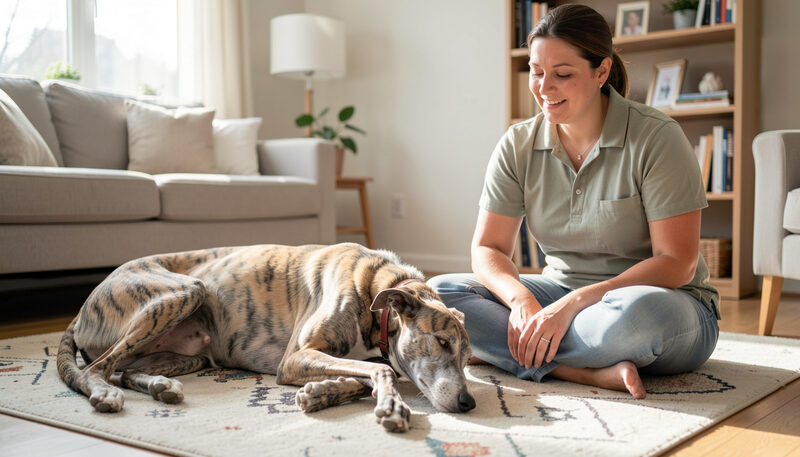
Adopting an ex-racing greyhound in Australia means joining a guided matching process, bringing home a dog that is already desexed, microchipped, vaccinated and health checked, and staying in contact with the adoption team after arrival. You share your routine first, meet dogs at a centre, then receive care notes and medical history for the dog you welcome home.
How does GAP match a greyhound to your lifestyle?
GAP describes its work as expert matching. You talk about your hours, your housing, your activity level and what you want in a dog, and the team uses that picture to suggest greyhounds that fit daily life in a regular home. The idea is simple. A calm dog suits a quiet household, a social dog suits a busy family, and a dog used to company suits a home where someone is often present.
If you are weighing age, energy and company, it helps to read the same way you would when choosing a shelter dog, with questions about alone time, visitors, children and other pets. Write down when you leave for work, where the dog will rest during the day, who will walk and feed, and what weekends look like. That detail lets the team compare your pattern with the personality notes they hold for each greyhound.
What does temperament-tested mean for you?
Every greyhound in the program is assessed for personality, behaviour and sociability. In practice, that means staff watch how the dog reacts to people, handling, lead walking and other dogs, then record what kind of home would suit. You adopt with a clearer picture than age and colour alone can give.
Ask what the assessment showed on lead, in new rooms and around visitors. Some dogs stay relaxed when routines change. Others need slower introductions and shorter first outings. The notes help you set the first week at a low-pressure pace, with rest, short walks and one room at a time.
What health care is already done?
All greyhounds adopted from GAP come desexed, vaccinated, microchipped, wormed and health checked. The program states that dogs arrive ready to settle straight into home life, which saves you the first round of starter procedures and gives you a known health starting point.
Keep the vaccination record, microchip details and worming dates in one folder with your vet clinic number. When you bring the dog home, you also receive helpful information on care and medical history, so you can show your vet what has been done and what routine care comes next.
Have these dogs lived in a home yet?
Many GAP greyhounds have started life beyond the track. Some have lived in foster homes. Others have gone through transitional training towards family life. That early step introduces indoor sounds, slippery floors, stairs, alone time and walking on lead in streets.
A foster note might mention sleeping through the night, waiting at doors or walking politely past traffic. Transitional work often covers the same basics in a centre setting. Neither stage makes a dog fully trained, so plan for the same early learning you would give any adult dog, including a steady toilet routine with regular outings, praise for going outside and calm clean-up indoors.
What happens after your first enquiry?
The adoption path runs in five stages. You reach out to the team, share information about your lifestyle and preferences in a friendly chat, visit an adoption centre to meet greyhounds, welcome your greyhound home once approved, and retain access to ongoing support. You can read the current outline of how GAP handles adoption before you call, so your questions are ready.
Use the information-gathering chat to mention children, cats, small dogs, work hours, fencing and stairs. Mention if you rent, how often visitors come and how long the dog would be alone. Clear answers at this point guide which dogs you are invited to meet and reduce changes later.
Can you meet several dogs at a centre?
Under the standard process, you visit an adoption centre and spend time with greyhounds to find a suitable match. You can observe walking on lead, response to voice, interest in people and recovery after excitement. Take your time and ask staff to show you feeding, resting and handling.
Bring the people who live with you when possible, keep greetings low-key and let the dog approach. Notice how the dog walks beside you, how it takes treats and how it settles after a short walk. Those small signs often tell you more than a first impression in a kennel run.
What is different about the Assisted Rehoming Program?
Some dogs are listed under the Assisted Rehoming Program, known as ARP. Those greyhounds stay with their current owners while they wait for a new home. If you show interest in an ARP dog, GAP arranges for that dog to come in specifically for you to meet and complete the adoption.
That detail changes the visit. Unlike the standard process, you do not meet multiple dogs at the same time through ARP. The team asks that you be reasonably confident the listed dog could join your family, and staff share detailed information ahead of the meeting to help you decide if the match fits.
What do Alley, Ruby, Linda and Heidi show about choice?
The current listings show how varied adult greyhounds can be. Alley is 5 years old, described as gentle, calm, polite and easy to handle, walking nicely on lead and open to an adventure. She may live with or without a medium or large canine companion and may suit a family with children aged 5 years and over. She may also suit a home with full-time workers.
Rhubarb Ruby is 1 year old, friendly and affectionate with a puppyish and enthusiastic manner. She loves treats and people. She may live as an only pet or with medium or large dogs, and may suit children aged 5 years and over. She has a deformed jaw and will need teeth checks every 6 months. Linda is 3 years old, friendly, confident and outgoing, playful and active with short bursts of zoomies before rest. She may live as an only dog or with a calm and polite small, medium or large companion, and may suit children aged 10 years and over. Heidi is 2 years old, gentle, affectionate, quiet and polite, suited to a relaxed home as an only dog or with a medium to large canine friend, and may suit dog-savvy children aged 5 years and over. Other listed dogs such as Quinny at 5, Chance at 6, Hercules at 4, Chivas at 5, Pocket at 6 and Ginny at 5 carry no detailed notes on the page.
How do you set up the first days at home?
Plan one quiet room with a bed away from foot traffic, water, a toilet area outside with easy access, and the same food and feeding times for the first days. Keep walks short while the dog learns your street, your stairs and your sounds. Many adopters find that a fixed pattern for morning outing, midday rest, evening walk and night toilet break helps an adult greyhound settle.
Watch body language around other dogs and choose early social contact with care, the way you would when you judge play with other dogs. Short greetings on lead, room to move away and rest between meetings work better than long off-lead sessions in the first weeks. If you have another dog, feed apart, give separate resting spots and supervise toys and doorways until routines are steady.
What support continues after adoption day?
Support does not end when you leave the centre. GAP offers advice through the life of the dog, which means you can ask about feeding amounts, coat care, nail length, dental checks, lead manners, alone time and introductions to children or other pets. Keep questions specific and note when a behaviour happens, how long it lasts and what helps the dog settle.
For Ruby-style dental needs, put the 6-month teeth checks in your calendar with vaccination and worming reminders. For active dogs like Linda, track zoomies, rest and sleep so exercise stays regular without tiring a new arrival. For calm dogs like Alley and Heidi, track lead walking, appetite and toilet pattern in the first two weeks, then share that log with your vet and the GAP team if you need guidance on next steps.