Puppy and Training Basics
Toilet Training a Puppy
Follow a steady toilet routine for puppies with timing, crate use and night breaks, and learn how to clean accidents and shape calm outdoor habits.
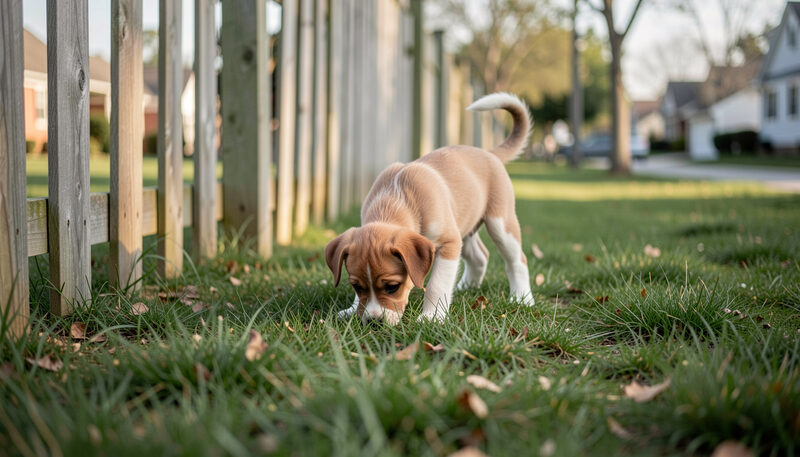
You can set a clear toilet routine from the first day your puppy arrives, with frequent breaks, close supervision and calm rewards for going in the right place. This guide explains the schedule, the crate habit, night breaks, food links, cues and how to clean up after accidents.
Why Start on the First Day Home
Your puppy starts learning household routines as soon as you carry it through the door, so steady expectations from the start help stop unwanted habits before they settle. Housetraining builds a base for daily life together because it teaches where to go, keeps the house cleaner and shows your puppy what behavior you expect. Many puppies arrive home at around 8 weeks, when bladder control is weak and trips outside need to be frequent. Age matters here, because control improves as your puppy grows and longer gaps between breaks become possible. For background on early learning, you can read puppy training basics alongside this toilet routine.
Mary Burch, Ph.D., director of the AKC Canine Good Citizen and S.T.A.R. Puppy programs, notes that several housetraining approaches can work when they are paired with consistency and proper supervision. That point matters for Australian homes where work hours, yards and rental rules differ. You do not need a complex system. You need the same door, the same spot outside and the same response every time, so your puppy can link the act with the place.
How a Crate Helps You Keep a Routine
A crate is one of the more useful housetraining tools because dogs often prefer not to soil a sleeping area. When the crate is introduced in a calm way, it also helps a dog accept confinement for vet visits, travel and other times when waiting in a small space is necessary. Dogs often seek den-like spaces, which is why a well-set-up crate can feel settled rather than strange. The principle is simple. When your puppy needs to go, it may whine, scratch or turn restless, and your prompt move to the door strengthens the link between holding on and going outside.
Size shapes how well the crate works. It should give room to stand, turn around and lie down, but not so much room that one corner becomes a toilet and another corner becomes a bed. Many crates have adjustable partitions, so you can widen the space as your puppy grows. Keep bedding simple and keep the door routine the same. Carry or walk your puppy straight to the approved outside spot after crate time, then reward it after it finishes.
What About Puppy Pads Inside
Puppy pads and paper training involve a trade-off. Dr. Burch explains that you are reinforcing two different options for the puppy, holding it indoors until going outside versus permission to go on a pad at home. In an ideal pattern, a puppy learns to hold on indoors and only eliminate outdoors. Pads can still have a place for owners who cannot return home often during the day or for people with very small dogs in places with severe winter weather. They give the dog an approved indoor spot instead of a random corner.
There are also indoor dog potties, including designs that work for male dogs. If you use one, treat it as a defined area with clear edges, not as loose paper spread around the room. As the dog matures, you can move gradually toward outdoor training by keeping the same cue and reward and shifting more trips outside. Keep the indoor spot clean and in one place while you make that change, so the lesson stays about place rather than surface.
What a Day of Toilet Breaks Looks Like
A steady schedule matters because puppies have small bladders and immature digestive systems. A common guideline cited by AKC is that a puppy can often hold its bladder for about the same number of hours as its age in months, up to about 9 months to 1 year of age, with a 6-month-old puppy sometimes managing around six hours. Individual puppies vary, and some need more frequent trips. You can compare your own day against the detailed guidance on potty training puppies and keep the parts that fit your work and yard.
Very young puppies are usually taken out first thing in the morning, last thing at night, after naps, after crate time, after meals, after drinking water, after chewing on toys or bones and after indoor play. That can mean a dozen outings or more in one day. When your schedule cannot cover every break, ask a trusted friend, neighbor or dog walker to keep the timing intact. The faster your puppy practices the right place, the smoother the habit becomes.
How Do You Read the Signs in Time
Every puppy develops its own bathroom habits. Some hold on longer than others, while some need a break each time excitement or activity rises. Watch closely during play, after waking and after eating, because anticipation prevents more accidents than correction ever fixes. Useful signs that a trip is due include sniffing the ground, circling, suddenly stopping play, whining or scratching at a door and becoming restless.
When you see one of those signs, move calmly and use the same door each time. Do not call out, chase or add noise, because that can distract your puppy at the wrong moment. Lead it outside to the same area, wait quietly and let sniffing do its work. If it goes, reward right away. If it does not go after a short wait, bring it back inside under close watch and try again soon.
How Food Shapes Toilet Habits
Feeding times shape toilet times. Because puppies have developing digestive systems, many do better with several smaller meals rather than one or two large ones. The type of food counts too. Choose a high-quality puppy food that agrees with your dog and produces healthy stools, then keep mealtimes regular so outings can follow in a predictable order. A stable gut makes the schedule easier to read.
Watch the stool without turning it into a project. If stools are routinely loose, bulky or unusually foul-smelling, speak with your veterinarian about food choice or about changing when and how much you feed. Overfeeding can contribute to diarrhea, and diarrhea makes housetraining much harder because the puppy cannot hold on long enough to reach the door. Keep treats small during training so frequent rewards do not unbalance the diet.
How a Simple Cue Makes Outside Clear
A verbal cue helps your puppy understand what you want in the correct place. Pick a plain phrase such as "Go potty" and say it calmly each time your puppy begins to urinate or defecate outside. Repetition builds the link between the words, the act and the place. Over time, the cue can make bathroom trips more efficient and help carry the habit into new environments. That early cue work sits well beside basic training commands taught in short, calm sessions.
Timing of the reward matters as much as the words. When your puppy finishes outside, praise it right away and add a small, high-value treat. Pair the cue, the action and the reward in the same order each time. Small treats suit training because they are easy to digest and allow repeated rewards without heavy feeding. Keep your voice warm and steady, then move on so the outing stays linked to the toilet task.
How to Handle Accidents Without a Fuss
Positive reinforcement works faster than punishment for mistakes. When your puppy eliminates in the right spot, respond at once with enthusiastic praise and a small treat. Cheer, clap and offer the cookie without delay, so the puppy connects the reward with that exact act in that exact place. If an accident happens indoors, Dr. Burch advises against making a fuss. Clean the mess without scolding and reset the supervision.
Clean the area thoroughly with an odor-neutralizing product that removes lingering scent, because leftover smell can draw your puppy back to the same spot. If you catch your puppy starting to urinate or defecate indoors, pick it up calmly and move it outside at once. If it finishes in the correct location, reward it generously. Keep doors, baby gates and lead access arranged so the path outside stays short while learning is fresh.
How Long Before Habits Hold
The timeline varies widely. Age, earlier experience, consistency and method all shape how quickly a puppy learns. An 8-week-old puppy has different physical limits than a 5-month-old puppy, so early weeks call for more trips and closer watch. Some puppies settle into reliable habits within days, while others need several months, especially after inconsistent routines in a previous home. A steady plan with patience and persistence helps many puppies learn where and when to go.
Night breaks belong inside that same plan. Take your puppy out last thing at night and again first thing in the morning, with crate rest in between and a quick trip if it wakes up restless. Keep lights low, keep talking to a minimum and return it to rest after the reward. Set the same morning door, the same outside corner and the same cue tomorrow, then keep that loop until the signals grow easy to read.