Everyday Life Beach and Services
Dog Beaches Around Melbourne
Explore off lead beaches near Brighton and Melbourne with seasonal hours, permits and fencing notes, plus etiquette for swimmers and wildlife nearby.
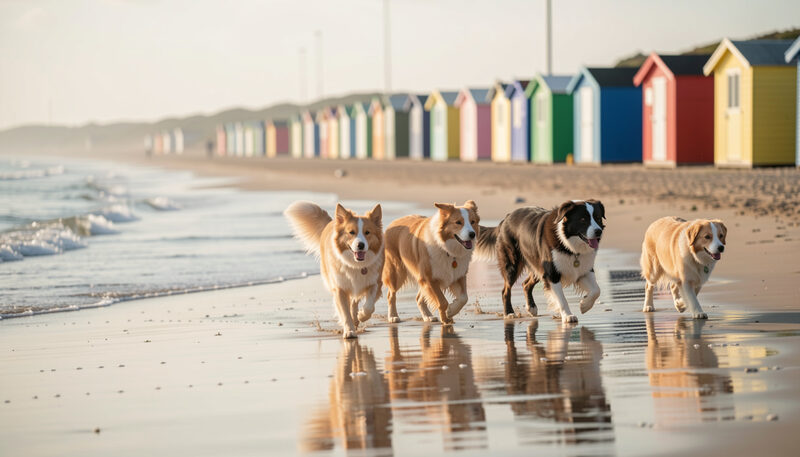
You arrive in Brighton with a dog that wants to run and a lead in your hand, and you want a simple answer about where dogs can be off lead. The Brighton listing for Dendy Street beach gives you a starting point with a few concrete details, and the rest comes down to what you check on the day. You learn the length of the beach, what the boat sheds mean for movement, what access looks like, and which nearby streets also hold listed dog parks.
What makes Dendy Street beach stand out
The Find a Dog Park page describes Dendy Street beach through its boat sheds and its place in Melbourne beach life. You picture a working shoreline where sheds line the sand and people stop to take photos, and where dogs move through a shared space rather than a closed park. That setting asks for close control even when your dog is legally off lead. You keep your dog in sight around corners created by sheds, you call back before greeting another group, and you give walkers and swimmers a wide berth. The page frames the location as a beach with character, and you treat that character as a cue to stay alert.
How far can you walk with your dog
The listing gives one clear measurement. Dendy Street beach is 500 m long. You can use that number to plan water, rest, and recall practice. A 500 m stretch lets you walk out and back without committing to a long coastal hike, which suits young dogs, older dogs, and dogs that are still learning to respond around distractions. You set a pace that leaves room for sniffing, you turn early if your dog tires, and you watch paws on hot or coarse sand. The distance is short enough to keep sessions calm and long enough to practice loose walking between play bursts.
Why do boat sheds change your handling
Boat sheds break line of sight. Your dog may disappear for a few seconds behind a shed and reappear near another dog or a picnic setup. You adjust by shortening the distance you allow, even off lead. You practice frequent check-ins, you reward a fast return, and you step in front of a shed line before you release your dog again. For dogs that chase or rush up to others, sheds raise the chance of surprise meetings. You can read more about taking a dog to the beach and how to manage greetings in open but obstructed places. The sheds make the beach photogenic, and they also make supervision a hands-on job.
What does parking and access mean for you
The listing notes good parking and access. You can read that as help with the practical part of the visit rather than a promise about conditions on any given day. You still plan for a busy car park on warm weekends, you carry your lead from car to sand, and you look for the signed entry point instead of cutting across dunes or private frontages. Good access helps if you travel with a crate, a water container, towels, and a second person holding the dog while you unload. You leave extra time to settle the dog before you unclip, so the first minutes on sand do not turn rushed.
How do you find the off-leash section on arrival
The listing carries headings for Off-leash Area, Access for Dogs, and Map, and it invites you to check the full detail through the Dendy Beach off-leash listing before you go. Beach zones in Brighton can change with signs at stairways, ramps, and shed rows, so the line on a web page never replaces the sign in front of you. You walk to the access point, you read the sign for boundaries and times, you note where dogs must stay on lead, and you follow the marked entry and exit. If the sign and the page seem to differ, you follow the sign.
What about hours and permits around Brighton
The Find a Dog Park page does not publish the off-leash hours or permit details for this beach. You therefore verify times, seasonal rules, and any local registration or permit requirement with the signs on site and the council information for the day of your visit. You keep proof of registration and vaccination where you can reach it, you keep your lead visible even during off-lead time, and you leash up as soon as you reach a boundary. Dogs that do not yet come when called stay on a long line instead of running free. Clear paperwork and a reliable recall keep a beach outing smooth for everyone sharing the sand.
Which nearby streets also list dog parks
The same listing names several nearby dog parks by street address in Brighton 3186, which helps you build a backup plan when the beach is crowded or windy. You can look up each address separately and check what type of space it offers before you drive over:
- 80 William Street, Brighton 3186
- Bent Avenue, Brighton 3186
- 7 Sandown Street, Brighton 3186
- 154 Esplanade, Brighton 3186
- Cnr Were Street and Esplanade, Brighton 3186
- Cnr Beach Road and South Road, Brighton 3186
You use these addresses as starting points for a short walk, a toilet break, or a calmer play session. You check entry points, fencing, shade, and water availability for each spot on arrival, and you pick the space that matches your dog on that day rather than driving to every address in turn.
How do you judge play when the beach is busy
A beach packs many triggers into a small area, including runners, balls, birds, food, and off-leash dogs with different play styles. You watch body language more than noise. Loose movement, play bows, and turn-taking point to comfortable play, while stiff posture, hard staring, pinning, or chasing that does not stop on a call points to stress. You can review how to judge play before you go, so you can step in early. You call your dog out for short breaks, you reward calm settling on a towel, and you move away to the water's edge or back toward the sheds when the group gets too intense.
What skills help most on a 500 m beach
Recall, drop, and a settled wait carry most of the work on sand. You practice them at home and in quiet parks first, then you test them at low distraction times at the beach. Short, upbeat training reps fit well into a 500 m walk because you can train, release, walk, and train again without tiring your dog. You bring high-value treats in a sealed pouch, you keep sessions to a minute or two, and you end with a sniff walk. For ideas you can review basic training commands and pick one skill to rehearse on each visit, such as recall past a shed or a calm sit while people pass.
What do you pack for Dendy Street beach
You pack for sand, sun, salt, and a quick exit if conditions change. Fresh water and a bowl come first, since salt water does not replace drinking water and some dogs drink it when thirsty. You add a towel, spare bags, a standard lead plus a long line for uncertain recall, treats, and a toy that stays in your pocket until the moment is right. After the walk you rinse salt and sand from paws and coat, you check ears and between toes, and you offer water and shade. You park the car with ventilation in mind, leash up at the boundary, and note which access point and street address worked for your dog for next time.