Everyday Life Beach and Services
Raw Dog Food Calculator
Work out how much raw food to feed your dog per day with a weight-based calculator, plus safe handling, bowl balance and adjustment tips.
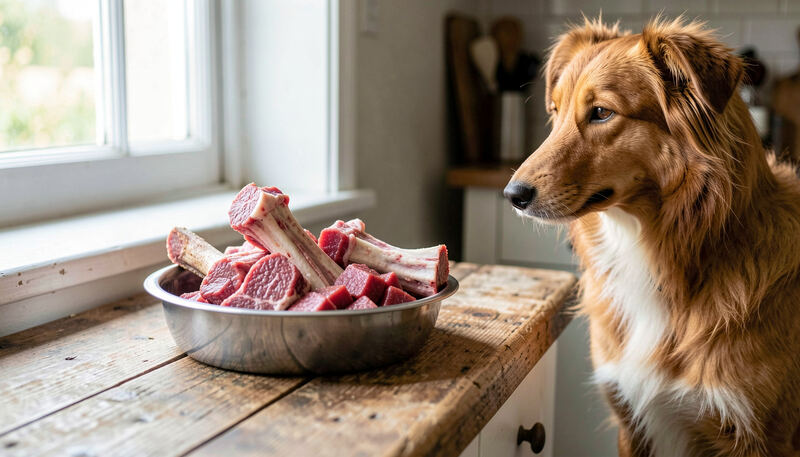
Raw feeding starts with one number: how much food your dog actually needs each day. This calculator gives you a daily portion in grams from your dog's weight, life stage and body condition, then the guide below explains how to turn that figure into balanced bowls.
Use the raw feeding calculator
Enter your dog's weight in kilograms, choose adult or puppy, then pick the body condition goal. The result is a daily amount of raw food, which most owners split into two meals for adults and three or four for puppies.
Where the percentages come from
The working range used by most raw feeding guides is 2 to 3 percent of an adult dog's body weight per day. A 20 kg dog at maintenance therefore lands near 500 grams daily, while a dog that needs to slim down sits closer to 400 grams. The percentage is a starting point, not a verdict. Dogs vary by metabolism, desexing status, breed and daily activity, so the number only becomes accurate after you watch your own dog for a fortnight.
Puppies eat far more in proportion to their size because they are building bone and muscle at speed. The calculator steps the percentage down as the weeks pass: around 8 percent of body weight for a young puppy, easing toward adult levels as the first birthday approaches. From 4 to 7 weeks old, most puppies are simply fed to appetite across frequent small meals.
What goes into the bowl
A raw ration is usually built from three parts. Muscle meat forms the bulk, edible raw bone supplies calcium and keeps stools firm, and organ meat adds the vitamins that plain mince lacks. A common working split is roughly 80 percent muscle meat, 10 percent edible bone and 10 percent organ, with half of that organ share as liver. Some owners add a small amount of grated vegetable or fruit, which is optional rather than required.
Raw meaty bones such as chicken necks, wings or lamb flaps serve double duty in Australian bowls: nutrition and teeth cleaning. The rule that never bends is that bones must be raw. Cooked bones of any kind can splinter and are never safe. If your dog gulps rather than chews, choose pieces larger than its mouth so the bone forces a proper chew instead of a swallow.
Handling raw food safely at home
Treat your dog's meat with the same hygiene you use for your own. Buy human-grade meat, keep it cold, thaw portions in the fridge rather than on the bench and wash bowls, knives and boards after each meal. Bacteria such as Salmonella and Campylobacter are the reason some vets stay cautious about raw diets, and households with very young children, elderly people or anyone immunocompromised should speak with their vet first.
Watch stools during the first weeks. Small, firm stools suggest the bone content is right; chalky or crumbly stools mean too much bone, while loose stools can mean too little bone or too much organ. A balanced approach matters more than any single meal, and our new owner questions page covers the everyday doubts that come with diet changes.
When to adjust the amount
Weigh your dog every two to four weeks and run your hands along the ribs. You should feel ribs under a thin layer of fat without seeing them from across the yard. If the waist is vanishing, drop toward 2 percent; if the ribs are sharpening, lift toward 3 percent. Growing pups, pregnant or nursing females and dogs recovering from illness all sit outside the standard range, so those cases belong in a conversation with your vet.
Feeding is only one half of a settled dog. Regular training keeps meals predictable and calm, and the cues in our ten basic commands guide pair well with a set feeding routine. Dogs that eat at the same time and place each day are easier to toilet train, which links neatly with the schedule in our puppy toilet training guide for younger dogs.
Common mistakes in the first month
The most frequent error is feeding by eye rather than by scales. Kitchen guesses drift upward over weeks, and a dog that gains two kilos on a 20 kilo frame has added a tenth of its body weight. Weigh the bowl for the first month until your eye learns the portion. The second error is variety panic: owners add five proteins in the first week. Start with one protein for a fortnight, then add another once stools stay steady.
Finally, do not mix raw and kibble in the same bowl if your dog shows a sensitive gut. Many dogs handle both diets across a day without trouble, but keeping meals separate makes it far easier to spot which food caused an upset. When in doubt about any change, the everyday dog life section gathers the practical guides, and your own vet remains the referee for dogs with existing conditions.