Everyday Life Beach and Services
Why Dogs Get Erections, and When It Needs a Vet
Why male dogs get erections, what the red rocket and bulbus glandis are, why desexed dogs still get them, and the signs that need a vet the same day.
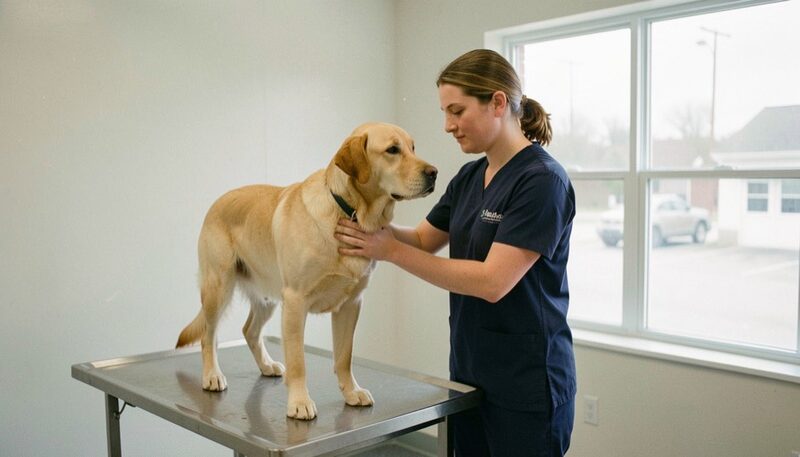
A dog's erection is usually a normal reflex, not a sign that something is wrong. Male dogs, entire or desexed, can show the pink or red tip owners call the "red rocket" when they are excited, handled or mounting, and it normally slips back into the sheath within a few minutes, or at most about an hour. It becomes a vet matter when it will not go back, looks dark or dry, bleeds, or comes with constant licking or trouble passing urine.
What is the red rocket, exactly?
The furry tube under a male dog's belly is the prepuce, or sheath: skin that covers the penis while the dog is relaxed. What pokes out during excitement is the penis itself, covered in a moist mucous membrane, which is why it looks pink to bright red and slightly wet. Extra blood makes it swell and darken; once that blood drains away, it slides back out of sight.
Two features set a dog apart. A bone, the os penis, keeps the organ firm even when the dog is not aroused. The bulbus glandis, erectile tissue at the base of the penis, fills with blood and shows as two rounded bumps under the skin of the sheath. During mating that swelling holds a pair of dogs together in the tie that breeders describe.
Why do dogs get erections when nothing sexual is going on?
In veterinary language, arousal covers far more than sex. Excitement of many kinds can send extra blood into the penis: a favourite person at the door, a belly scratch, the lead coming off its hook, a strong new smell. None of these moments is sexual for the dog, and none needs a response beyond letting him settle.
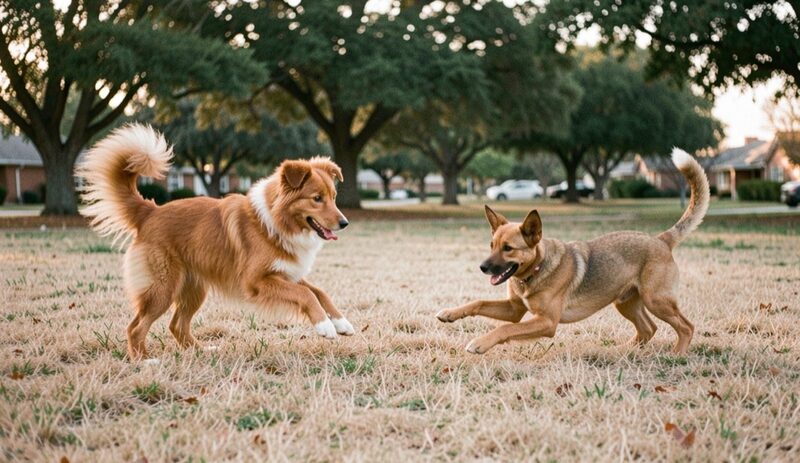
Mounting is a separate behaviour that sometimes travels with an erection and often does not. The ASPCA guide to mounting and masturbation in dogs sorts mounting into several motives: sexual interest, play, stress or excitement, social status and, in some dogs, compulsion. It also notes that dogs don't usually show an erection or ejaculate in the context of play, so a young dog that mounts his playmate at the park is usually playing, not courting.
Do desexed dogs still get erections?
Yes. Desexing a male dog removes the testicles, the main source of testosterone, but it leaves the penis, the os penis and the bulbus glandis in place, and their blood supply still responds to excitement. The ASPCA states plainly that neutered males can display erections and ejaculate just like intact males. A red tip on a desexed dog does not mean the surgery was incomplete, and the two bumps of a swollen bulbus glandis are not testicles growing back.
Do dogs get horny, and is that why they hump?
Entire males do have a sex drive, shaped by hormones, and it shows most when a female nearby comes into season. The UK veterinary charity PDSA lists hormones as a common reason an undesexed dog humps other dogs, people, toys or blankets. It is also clear that both male and female dogs hump, and not always for sexual reasons: overexcitement in play, spare energy, stress or anxiety, and itchy skin can all start it.
Desexing helps when the cause is hormonal, usually more in males than in females, according to the PDSA. It does not always stop the behaviour, partly because a dog that has learned mounting feels good may keep doing it out of habit.
Do male dogs ejaculate in the house?
Some do, and it is not a sign of a problem in itself. Masturbation, whether by humping a cushion, a soft toy or a folded blanket, is part of normal sexual behaviour in both desexed and entire dogs, and a dog can ejaculate while doing it. Mounting for play or social reasons rarely ends that way. Wash the bedding or toy on a hot cycle, and if one item has become the regular target, put it away for a while.
Pay closer attention if the habit appears suddenly, becomes more frequent, or the dog cannot be distracted from it. The ASPCA notes that masturbation can become compulsive, especially as a response to stress, and that urinary tract infections, incontinence, priapism and skin allergies can sit behind unusual mounting or rubbing. A vet check comes first; a behaviour professional can follow once the body is cleared.
How long should a dog erection last?
A normal erection lasts from a few minutes up to about an hour. If the swelling goes down within that time and the dog is eating, moving and toileting as usual, it does not need treatment. Meanwhile the penis should stay moist and pink to red, and the dog comfortable enough to ignore it. The table sets the usual picture against the signs that need a vet.
| What you see | Usually normal | Call the vet |
|---|---|---|
| Red tip out during excitement | Goes back within minutes, an hour at most | Still out after about an hour |
| Colour of the exposed tissue | Moist, pink to bright red | Dark, dry or crusted |
| Two bumps at the base | Soft swelling that fades with the erection | Lumps that stay once the erection is gone |
| Discharge at the sheath opening | A little yellowish-white smegma | More than usual, a new colour, or any blood |
| Licking | Brief cleaning | Constant licking or signs of pain |
| Urination | Normal stream | Dribbling, straining or no urine |
When does an erection become an emergency?
Two conditions turn a harmless reflex into an urgent visit. Paraphimosis is the inability to fully return the penis into the sheath. The MSD Veterinary Manual entry on paraphimosis explains that the exposed penis swells because blood cannot drain away, then the surface dries out and becomes painful, and the dog's own licking makes it worse. In dogs it most often follows semen collection or mating, but a small sheath opening, hair caught at the opening or an injury can also cause it. Priapism is different: a persistent erection with no sexual trigger at all.
While you call the vet, keep the exposed tissue moist with a sterile water-based lubricant, stop the licking and do not force the penis back in. In an early case a vet can often clean, lubricate and ease the sheath forward; a persistent one may need cold compresses, sedation or surgery. Blood from the penis, tissue that turns dark or dry, or a dog that cannot pass urine needs a clinic the same day, or an after-hours emergency hospital.
What about discharge and licking?
Many healthy male dogs, puppies especially, have a little smegma at the tip of the sheath: a yellowish-white, sometimes slightly green-tinged mix of fluid and dead cells that keeps the area lubricated. Brief licking to keep it clean is ordinary too. What changes the picture is discharge from the penis itself, a sudden change in its amount or colour, any blood, or licking that goes on and on. Those signs point towards infection, injury or a urinary problem, and a vet should look at them.
How should you respond at home?
Calmly. An erection is a body reaction, not a choice, and the PDSA advises against punishing humping, since the dog will not understand why. If the moment is awkward, give the dog something else to do: ask for a sit, toss a toy, or send him to his bed. The steps for teaching a solid sit, leave it and settle on the bed build exactly those cues. Reward the calm behaviour when it returns.
Prevention is mostly about energy and routine: a dog with enough exercise, sniffing time and rest is less likely to boil over when guests arrive. If he mounts other dogs again and again at the park, end the session and try a quieter time; the guide on how to judge play at an off-lead dog park shows the signs that a game has tipped into too much. Questions about desexing and its timing belong at your next vet visit, alongside the checks listed in the new owner questions about vets and routine care.
Quick answers
Can a desexed dog's testicles grow back?
No. Castration removes both testicles. The two firm bumps owners sometimes feel during an erection are the bulbus glandis, a normal part of the penis, and they shrink again once the swelling drains.
Should you push a dog's penis back into the sheath?
Never force it. Keep the tissue moist with a sterile water-based lubricant, stop the licking and call your vet. If the penis has stayed out for more than about an hour, or looks dark, dry or badly swollen, treat it as urgent.
Does desexing stop a dog from humping?
Not always. Desexing lowers sexual motivation and helps most when hormones drive the humping, especially in males, but habit, excitement and stress can keep the behaviour going. Training a calm alternative works alongside it.